How can you tell if your roof has hail damage? The clearest signs are cracked or missing shingles, granule loss in gutters, dents in metal surfaces, and damage to nearby features like siding or decks. Because some issues aren’t visible from the ground, the safest way to know for sure is to schedule a professional hail damage roof inspection.
Schedule a Hail Damage Roof Inspection If You Notice These Signs
If you suspect hail damage on your roof in San Antonio, there are a few things you can look for from the ground. Common warning signs include cracked or missing shingles, loose granules, dents in flashing or gutters, and visible damage to surrounding areas. However, a professional hail damage roof inspection is the best way to confirm your roof’s condition.
Our expert team at Dolan Roofing & Construction has been completing storm damage roof repairs and replacements throughout the San Antonio area this season. Here’s what homeowners should know about spotting hail damage—and when to call a roofer.
Signs of Hail Damage by Roof Type
1. Asphalt Shingle Roofs
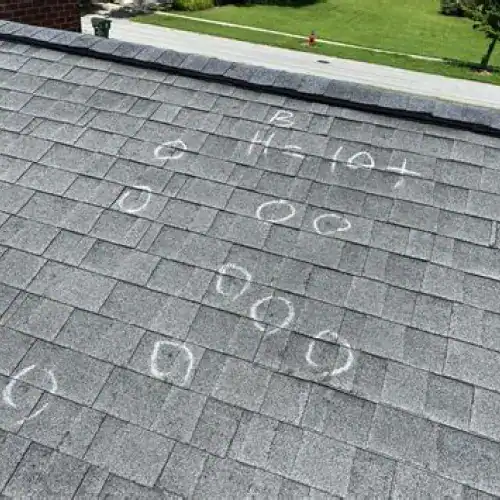
Asphalt shingles are the most common roofing material in Texas—and the most likely to show hail damage.
Signs to look for:
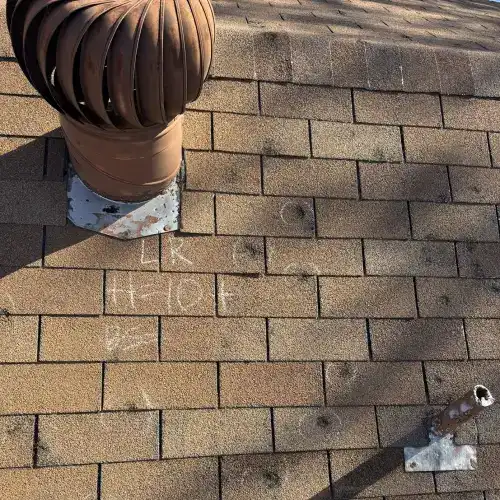
- Dark, circular spots (impact marks)
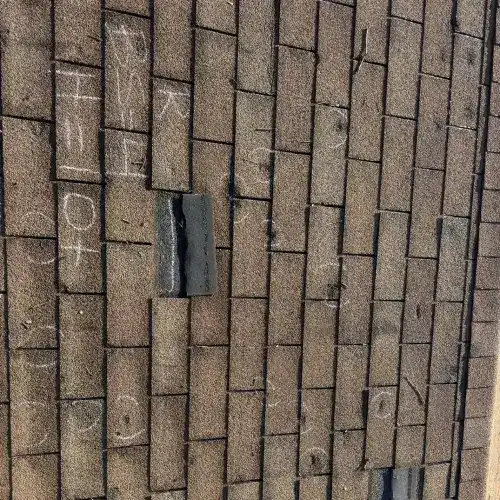
- Cracked, loose, or missing shingles
- Granule buildup in gutters or around downspouts
Tip: Stand back from your home and look for discoloration or inconsistencies in the shingle pattern.
2. Tile Roofs
Tile roofs are highly durable but can crack under large or dense hail.
Signs to look for:
- Broken or cracked tiles
- Tile fragments on the ground near your home
- Exposed underlayment
Tip: Damage to tile roofs is typically visible from the ground.
3. Metal Roofs
Metal roofs are resistant but not immune to hail damage.
Signs to look for:
- Large dents or punctures
- Deep scratches or cracks in the surface
- Cosmetic dings (less urgent but worth noting)
Tip: Functional damage to a metal roof can lead to leaks or rust over time.
Other Ways to Tell If Your Roof Has Hail Damage
While the clearest signs of roof hail damage will be on your roof, climbing on your roof is not recommended. Luckily, there are also some signs you can look for around the rest of your home’s exterior, including:
- Checking exterior features for damage, including dents to your siding, deck, grills, or patio furniture
- Check with neighbors and others around your neighborhood
- Review weather reports from your area to determine hail size
Factors Influencing Hail Damage Severity
Not all hail storms will cause roof damage. Generally, roof damage from hail will arise under specific circumstances. Factors that impact hail damage severity include:
Hail size and density
While larger hail tends to be heavier and more destructive, density matters at least as much; smaller, denser hail may actually do more damage than hail that is larger in size.
Wind speed and direction
High winds can make hail damage worse, and depending on its direction, it can cause hail to make a more direct impact with your roof.
Age and condition of the roof
Older roofing materials are more susceptible to damage. On a similar note, a roof that is already somewhat damaged or poorly maintained is more likely to be further damaged by hail.
Protective barriers
Surrounding trees or nearby buildings and other structures can sometimes help to mitigate hail damage.
DIY Inspection Tips
A good first step after a hail storm is to complete a DIY visual inspection of your roof for damage. Here’s how to check for damage without putting yourself or your home at risk:
Safety First
Stay on ground level as much as possible. Use binoculars to get a better view of your roof from the ground if needed. If you must get a closer look, climb up on a ladder (safely!) but do not walk on your roof.
Check Gutters and Downspouts
Loss of asphalt granules from shingles is common with roofing damage of all varieties. When these granules come loose, they tend to be washed from the roof into gutters and downspouts.
Inspect Attic and Ceilings
Leaks and water damage generally indicate more severe roofing issues. After storms or heavy rainfall, check your attic and ceilings of upper floors for water stains, mold, mildew, and other signs of moisture.
When to Call a Professional for a Roof Inspection
If you notice visible signs of roof damage—such as dented shingles, cracked tiles, or granule loss—it’s time to contact a roofing professional right away. Delaying repairs can allow water intrusion, leading to more costly structural issues.
Even if your roof looks fine after a hail storm, damage isn’t always obvious from the ground. Hidden issues like bruised shingles or compromised underlayment can go undetected until leaks appear. That’s why it’s smart to schedule an inspection after any significant hail event.
Our Hail Damage Roof Inspection Services
A professional assessment also provides detailed documentation that can be essential for insurance claims. With a thorough report in hand, you’ll have the evidence needed to support your case for coverage.
At Dolan Roofing, our hail damage inspections are designed to give you peace of mind and a clear path forward. Our process includes:
Detailed inspection
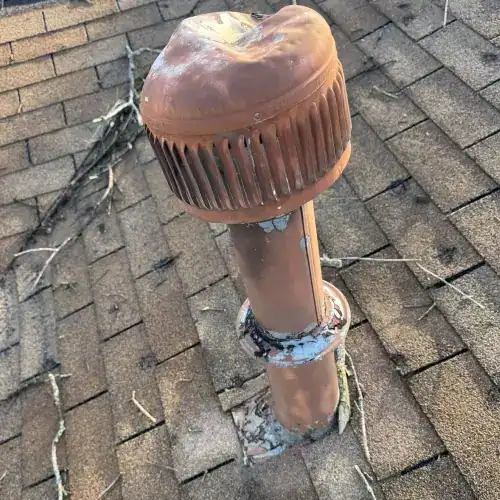
Our experts carefully evaluate your roof for both visible and hidden hail damage, checking shingles, flashing, gutters, and other vulnerable areas.
Photo documentation
We provide a complete visual record of our findings to help you understand the condition of your roof and provide evidence to support any needed insurance claims.
Our team works directly with you and your insurance provider, streamlining the claim process.
Quality above all else
We stand by our workmanship, using durable materials and proven techniques to restore your roof’s integrity.


 Read our full guide on what to do after receiving an insurance check.